PART II. Comparative analysis of the three leaders
Introductory paragraph to Part II: from theory to comparative analysis
If the first part showed that authoritarian, semi-authoritarian, and hybrid regimes do not need to abolish elections in order to seriously damage the equality of political competition, then the second part must show what those patterns look like in concrete historical cases. This is why comparing Milošević, Putin, and Vučić is not an exercise in simply equating three political figures, but an attempt to identify related mechanisms of regime legitimation, opposition delegitimation, and political-space management across different contexts. The theoretical concepts introduced in Part I, authoritarianism, electoral authoritarianism, competitive authoritarianism, democratic backsliding, and informational autocracy, function here as analytical lenses. Through them, rhetoric about external threat, the incumbent’s monopoly over economic competence, security responsibility, and media dominance can be seen not as a series of isolated political messages, but as elements of a broader model of rule. In that sense, this second part should be read as the empirical descent of theory: from abstract regime models to concrete political practice.
5. Economy: stability as a political monopoly
For all three leaders, the economy was or is far more than a public-policy field. It is at once a source of legitimacy, an instrument of political discipline, and a language through which power explains why it, and only it, must remain at the apex of the political system. In that sense, economic discourse is not merely about budgets, growth, or investment. It is also about who is capable of governing the state and who would allegedly lead it into chaos. This is precisely why authoritarian and hybrid regimes often present economic success not as the product of plural institutions, but as the personal or regime-specific achievement of the incumbent. Such a pattern fits the broader model in which the government monopolizes not only power, but the symbolic right to define what “stability” means, who guarantees it, and who threatens it.
Under Milošević, this pattern took a particularly dramatic form. The 1990s were marked by state disintegration, wars, international sanctions, hyperinflation, collapsing production, and deep social insecurity. In that context, regime economic rhetoric could not credibly rely on a story of prosperity, so it was built around survival, endurance, and the blame assigned to external actors. Economic collapse was not presented as the consequence of internal political decisions, but as the product of international pressure, hostile surroundings, and historical injustice toward Serbia. In this way, the regime preserved an important resource of legitimacy: even when it could not deliver growth, it claimed to be the only force capable of preserving at least a minimum of state and social stability under external siege. In such a frame, the opposition could more easily be portrayed as politically irresponsible, because it allegedly failed to understand the weight of external pressure or even worked in the interest of those producing that pressure.
Under Putin, the economic story acquired a different tone. If Miločević’s was a discourse of survival under pressure, Putin’s was long a discourse of restoration. The key legitimating pattern was simple: after the chaotic 1990s, Russia had supposedly regained a functioning state, restored control over resources, begun to pay wages and pensions on time, rebuilt fiscal capacity, and returned to citizens a sense of order. In this narrative, economic stabilization is not just a macroeconomic result, but proof of the historical correctness of the political course. Guriev and Treisman (2020) see precisely this logic as characteristic of informational autocracy: the regime seeks not only obedience, but belief in its competence. Citizens are told not only that the власти are strong, but that they are rational, effective, and irreplaceable. Once that narrative is fused with a story of a hostile West, sanctions, and geopolitical pressure, the economy becomes moralized: loyalty to the government is presented as loyalty to stability and the state, while criticism is framed as irresponsible sabotage of the national position.
Under Vučić, economic discourse has a similar legitimating function, but adapted to a different institutional and international environment. Here the dominant themes are investment, infrastructure, foreign factories, wage and pension increases, “responsible policy,” and “stability.” The World Bank reports real GDP growth for Serbia at 3.9 percent in 2024 and GDP per capita at 13,679.2 current US dollars, while official and pro-government discourse frequently translates such figures into the broader political claim that the government alone knows how to “run the country” and guarantee continuity of development. Within that pattern, the opposition is presented not merely as politically mistaken, but as a threat to investment, living standards, international reputation, and the country’s overall economic security. The economy thus ceases to be one theme among others in political competition; it becomes the incumbent’s monopoly over the very idea of normal state functioning.
What matters here is that in all three cases the economy is used not only for self-praise, but also to structure political conflict. Once the government claims that only it can preserve the country’s course, the opposition ceases to appear as a legitimate alternative and instead becomes a threat to the common good. This is one of the key bridges between economics and electoral unevenness: voters do not enter campaigns with the message that different development strategies are on offer, but with the message that only one model guarantees survival, while anything outside it risks collapse. In that sense, economic discourse is part of political control, not merely of economic policy.
6. Foreign policy, sovereignty, and the narrative of the besieged state
Across all three cases, foreign policy is more than a domain of relations with other states. It also becomes an internal political resource. Regime discourse frequently produces an image of a state under constant pressure, surrounded by enemies, or at least exposed to strong external attempts to weaken, discipline, or destabilize it. Within that frame, the government presents itself as the last line of defense of sovereignty, while the opposition is easily depicted as naive, irresponsible, or openly linked to outside centers of power. This logic is especially useful in regimes that seek to translate every internal criticism into the language of national loyalty. Instead of a dispute over policy, politics becomes a dispute over who stands with the state and who stands against it.
Under Milošević, this pattern was closely tied to the disintegration of Yugoslavia, the wars, international sanctions, and conflict with Western powers. In such an environment, the political opposition could relatively easily be portrayed as insufficiently patriotic, politically shortsighted, or objectively aligned with those who wished to weaken Serbia. Here the foreign-policy discourse served a double function. On the one hand, it homogenized supporters around an image of collective endangerment. On the other, it relativized the internal responsibility of the regime for the political and economic consequences of its own course. If the state is permanently exposed to external blows, then any internal criticism can be framed as a luxury, sabotage, or lack of historical awareness.
Under Putin, this pattern took a much more systematic and durable form. The discourse of the West as a force seeking to contain, weaken, or subordinate Russia became one of the axes of regime legitimation. Within that frame, opposition figures, NGOs, independent journalists, and other critics are often labeled “foreign agents,” as carriers of hostile interests, or as actors undermining the country from within. Freedom House and Reuters show how this logic does not remain at the level of rhetoric, but acquires institutional form through “foreign agent” legislation, repression against civil society, and the shrinking of space for legitimate public criticism. The conclusion is important: the narrative of external threat is not merely a propaganda technique, but a way of reorganizing the political field itself.
Under Vučić, the same pattern appears in a milder, but still politically functional form. In moments of crisis, protest waves, or intensified social conflict, the government and pro-government media have repeatedly claimed that unrest, destabilization, or pressure is driven by foreign factors, foreign services, or international centers of power hostile to an “independent Serbia.” Reuters recorded in March 2025 that Serbian authorities accused Western intelligence services of destabilizing the country, while other agencies documented similar claims in relation to protests and student resistance. In that register, the opposition is not portrayed merely as a domestic political rival, but as a channel through which outside interests attempt to weaken the state. The boundary between loyalty to the state and loyalty to the incumbent thus becomes dangerously blurred.
The political effect of this discourse is multiple. It disciplines voters through fear of the external enemy, gives the incumbent a monopoly over the language of patriotism, and narrows the space for legitimate disagreement. Once the framework is established that criticizing the government may amount to working against the state, the electoral contest is no longer a dispute among alternatives. It becomes a test of political loyalty. This is precisely why the issue matters for election forensics: it shows how the symbolic terrain of elections is shaped long before the ballots are counted.
7. Military, security, and the politics of fear
Security discourse is another common denominator, even if its intensity and institutional expression differ. In all three cases, the military, police, and the broader security apparatus perform functions that go beyond their immediate professional role. They become symbols of state seriousness, national protection, and order. At the same time, the political leader is presented as the personal guarantor of safety, rationality, and control, while the opposition is more easily described as a source of chaos, irresponsibility, or danger to national interests. At this point security turns into a political language.
Under Milošević, this logic was directly linked to wartime conditions. The security apparatus and the question of national defense were inseparable from the overall legitimation of power. In such an environment, the distinction between regime interest and state interest grew increasingly weak. When the state is portrayed as living under permanent threat, every demand for democratic normalization can be framed as politically irresponsible or even dangerous. Security is thus used to limit the legitimacy of the opposition and shrink the space for public pluralism.
Under Putin, this pattern has been turned into a durable regime model. The security state is not merely a response to specific crises, but a lasting structure of political legitimation. The regime relies on the language of defense, endangerment, and civilizational conflict, while war and repression are presented as logical consequences of protecting the state. Freedom House documents the deep collapse of political and media freedoms in Russia, while Reuters and other sources show how this process is systematically justified through security rhetoric. Within such a framework, any serious opposition can more easily be stigmatized as a security problem rather than recognized as a legitimate competitor.
Under Vučić, the security narrative has a different form, but not an entirely different political function. Military modernization, arms procurement, emphasis on neutrality and regional uncertainty, and constant stress on stability and order all contribute to the image of the leader as the protector of the state. Reuters has repeatedly reported Vučić’s messages about military modernization, including Rafale aircraft and other security arrangements. Politically, such discourse serves not only to justify defense policy. It also positions the incumbent as the only serious force capable of governing the country in an uncertain region. The opposition can then be more easily depicted as irresponsible, immature, or dangerous to stability.
For electoral equality this matters because security language has a strong emotional effect. It reduces the space for rational comparison of political options and amplifies the incumbent advantage. When voters hear not only programmatic messages but also messages about danger, chaos, and protection of the state, the electoral process takes place in an environment that already favors the actor who monopolizes the symbolic capital of security.
8. Media, propaganda, and control of the communication space
If there is one domain in which the link between models of rule and electoral conditions is most visible, it is the media. Under Milošević, that link was relatively open: state and loyal media formed part of wartime propaganda, nationalist mobilization, and the systematic delegitimization of opponents. Historical scholarship and documentation centers describe in detail the way independent voices were pushed aside and the public sphere organized to reproduce the regime’s view of reality. In such a system, the media were not intermediaries of public debate, but instruments of political homogenization.
In Putin’s Russia, media control is more centralized and institutionally solid. Freedom House states that the authorities, directly or through loyal business structures, control all national television networks and a large part of the broader media space. What matters especially is that contemporary media control operates not only through classical censorship. It also works through ownership patterns, advertising, access, licensing, legal pressure, and the economic exhaustion of independent actors. The result is an authoritarian media system that does not need to ban everyone, because it first renders many opponents invisible, financially unsustainable, or legally vulnerable.
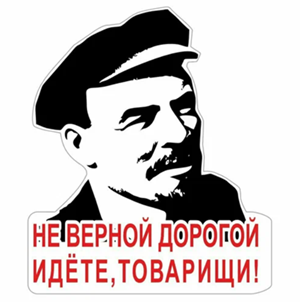
You're going down the wrong path, comrades!
Vučić’s Serbia represents a more hybrid model of media control. Formal pluralism exists, but the public sphere is deeply uneven. Freedom House and other international monitoring sources point to institutional capture, pressure on independent media, and serious irregularities affecting electoral processes. Particularly important is the political-economic dimension of media control: the distribution of public money, opaque advertising flows, the privileged position of pro-government media, and regulatory decisions that reproduce asymmetry. In this sense, control does not need to be openly repressive to be effective. It is enough for the informational space to be systematically tilted, for the incumbent to enjoy constant hyper-visibility, and for the opposition to be reduced to occasional or negatively framed visibility.
From an election-forensics perspective, this is crucial. Media inequality does not always leave a clear statistical trace easily visible in electoral tables, but it strongly shapes the conditions under which voters make decisions. If one side is permanently represented as responsible, stable, and state-building, while the other is portrayed as chaotic, dangerous, or foreign, then elections are already structured in favor of the incumbent. This is why media analysis is not an optional supplement to election forensics, but one of its central contextual pillars.
9. Internet and the digital sphere
The digital sphere is the main historical difference between Milošević’s period and the periods of Putin and Vučić. Milošević’s Serbia belonged mainly to the era of traditional media. Putin and Vučić operate in a time when the internet, social media, and digital platforms are no longer merely additional channels of communication, but one of the principal terrains of political struggle. That, however, does not mean that digitalization automatically expands freedom. On the contrary, in contemporary hybrid and authoritarian regimes the digital sphere becomes a space of surveillance, propaganda amplification, coordinated campaigns, and pressure on critical voices.
In Russia this trend has gone furthest. Freedom House records that internet freedom reached a new low in 2025, with blocking, legal restrictions, technical surveillance, and shrinking room for independent digital media. In Serbia the digital sphere remains much more open than in Russia, but it is not politically neutral. Pressure on independent journalists, smear campaigns, coordinated attacks, and abuses of the online space show that even in hybrid regimes the internet is not fully free, but an extension of the broader struggle to control the public sphere.
The importance of the digital sphere for elections is considerable because political competition today takes place not only through television, print, and rallies, but also through algorithmically mediated flows of information. Wherever the government or actors linked to it have a greater capacity to set the rhythm, focus, and interpretive frames of public debate, the online sphere can also deepen incumbent advantage. Open bans are not even necessary; systematic asymmetry in access to attention, resources, and smear capacity is enough.
10. Welfare, social security, and political loyalty
Questions of welfare and social security have a distinctly political function in all three cases. Under Milošević they were linked to the rhetoric of survival under sanctions, war, and economic collapse. Under Putin they were connected to the restoration of order after crisis and the return of dignity and material security. Under Vučić they are especially visible through the constant emphasis on wage and pension increases, public investment, aid to citizens, and the image of the government as the practical guardian of everyday life. In all these variants, social policy or social rhetoric functions not only as a response to economic needs, but also as a mechanism for consolidating political loyalty.
What matters is that in authoritarian and hybrid orders social security is often politically personalized. Instead of citizens being told that pensions, wages, and public services are the product of institutions, they are told that these are the results of the wisdom, strength, or responsibility of a particular leader. The government thereby gains additional symbolic capital: it appears not only as the manager of the state, but as the protector of everyday life. Within such a frame, the opposition can more easily be presented as a threat to living standards, households, and security. Electoral competition thus becomes a contest over the sense of material safety itself.
11. Education, science, and the autonomy of criticism
Education and science often occupy an ambivalent position in authoritarian and hybrid regimes. On the one hand, the government wants to appear modernizing, as a patron of development, technology, innovation, and progress. On the other hand, autonomous educational and scientific institutions can generate criticism, independent interpretations, and social legitimacy for political challenge. That is why such systems often display a gap between declarative support for knowledge and actual willingness to free knowledge institutions from political pressure.
Under Milošević, this relationship was shaped by war, sanctions, and strong political polarization. Under Putin, regime control over the academic sphere intensified in parallel with broader repression and the shrinking of space for independent criticism. Under Vučić, the relationship with universities and the academic community is more hybrid: formal autonomy exists, but political tensions, public delegitimization of critical academic actors, and attempts to discipline protest and independent voices show that the educational sphere is not outside the logic of political management. This matters for the broader analysis of regimes because it shows that political control does not end with parties and media, but extends into institutions that shape the long-term public mind.
12. Political freedoms, media freedoms, and electoral equality
One of the central lessons of this comparison is that formal pluralism does not guarantee real political equality. Opposition parties may exist, elections may be held, and even segments of critical media may survive. But if one side enjoys incomparably greater visibility, access to public resources, regulatory advantages, and symbolic power to define its opponents as illegitimate, then elections do not function as equal competition. Freedom House explicitly states that Serbia’s December 2023 elections were marked by serious irregularities and further weakened legitimacy, while Russia is, by all major indicators, a deeply consolidated authoritarian order.
This means that the difference among the three cases is not simply whether elections exist or not. The more decisive question is the degree of inequality in the conditions under which elections take place. Under Milošević, that inequality was bound up with wartime and propagandistic conditions. Under Putin it is institutionally deeper and more fully authoritarian. Under Vučić it remains within a formally pluralist framework, but with sufficiently strong media and institutional asymmetry that international observers and researchers increasingly speak of serious degradation of electoral competition. In that sense, election forensics cannot stop at results; it must also ask how equal the electoral space itself was.
13. Treatment of the opposition
Perhaps nowhere is the kinship among these three regime repertoires more visible than in the treatment of the opposition. In all three cases, the opposition is not described merely as a politically mistaken option. It is depicted as traitorous, foreign-backed, paid, disruptive, a security risk, or a threat to the economy and the state. Such labeling has a deep political effect. It moves the opposition out of the space of legitimate democratic disagreement and into the space of moral and state suspicion. Once such a frame is established, the electoral contest is no longer a dispute among programs and priorities, but between supposed order and supposed threat.
Under Milošević, this pattern was infused with national and wartime language. Under Putin, it has been institutionalized through legislative and coercive mechanisms that transform public critics into “foreign agents” or “traitors.” Under Vučić, it is softer in legal form but still powerful enough in media and politics to portray the opposition as inauthentic, externally inspired, incapable, or dangerous to stability. The electoral consequences are substantial: voters do not encounter the opposition as an equal participant in competition, but as a pre-problematized actor. In that sense, the very structure of opposition treatment becomes a significant object of analysis for electoral integrity.
14. Similarities and differences: a summary view
The most important similarities among Milošević, Putin, and Vučić are the personalization of power, the use of external threat as an internal political resource, the delegitimization of the opposition, the fusion of economic and security language, and the effort to keep the political field permanently tilted toward the incumbent. The most important differences concern the intensity of repression, the technological environment, and the international context. Milošević’s model was cruder, war-mobilizational, and shaped by state collapse. Putin’s is now more closed, more repressive, and more systemically authoritarian. Vučić’s remains formally more pluralist, but sufficiently asymmetrical for relevant international actors increasingly to describe it as a hybrid regime with seriously degraded electoral conditions. The analytically honest conclusion, therefore, is not that all three cases are identical, but that related political repertoires can be adapted to different historical and institutional environments.
15. Conclusion: what this means for free and fair elections
For election forensics, the central conclusion is simple: even a statistically orderly or “clean” result does not by itself prove that elections were free and fair. If the information space is captured, if the opposition is permanently delegitimized, and if public resources and regulatory levers are used to maintain inequality, then the electoral field is already distorted before voting begins. This does not mean that numbers are unimportant. On the contrary, they remain an essential part of diagnosis. But without the analysis of rhetoric, media, institutions, and models of rule, they remain incomplete. That is precisely why this second part, linked back to the theoretical framework of the first, shows that election forensics is not only the analysis of results, but also the analysis of the political world in which those results are produced.
Tabular Appendix: selected indicators
| Indicator | Milošević (1990s) | Putin (formal presidential terms) | Vučić (2012–present) |
| Freedom House status | No fully comparable contemporary annual series | Not Free, 12/100 | Partly Free, 56/100 |
| Nations in Transit regime type / score | Not directly applicable | Consolidated Authoritarian Regime, 1/100 | Transitional or Hybrid Regime, 43/100 |
| Freedom on the Net score | Predominantly pre-digital period | 17/100 | 67/100 |
| GDP per capita (current US$) | Series partial / methodologically weakly comparable | 14,889.0 (2024) | 13,679.2 (2024) |
| Real GDP growth | War, sanctions, and major series discontinuities | 4.3% (2024) | 3.9% (2024) |
| Unemployment, total (% of labor force, modeled ILO) | Weak comparability | 2.1% (2025) | 7.1% (2025) |
| Consumer price inflation | Hyperinflation in 1993–1994; modern series weakly comparable | 8.4% (2024) | 4.7% (2024) |
| Life expectancy at birth | Partly comparable historical series; caution needed | 73 years (2024) | 76 years (2024) |
| Individuals using the Internet (% of population) | Pre-digital period | 94% (2024) | 88% (2024) |
| RSF World Press Freedom Index | Historically documented regime control; no directly equivalent current series | 171/180 (2025) | 96/180 (2025) |
| Research and development expenditure (% of GDP) | No stable fully comparable series for the whole period | Series available via World Bank/UNESCO through 2024 | Series available via World Bank/UNESCO through 2023 |
| Military expenditure (% of GDP) | Wartime context; comparison limited | 7.1% of GDP (2024) | 3.3% of GDP (2026, Reuters) |
References
Bermeo, N. (2016). On democratic backsliding. Journal of Democracy, 27(1), 5–19. https://doi.org/10.1353/jod.2016.0012
Guriev, S., & Treisman, D. (2019). Informational autocrats. Journal of Economic Perspectives 33(4), 100–127. https://doi.org/10.1257/jep.33.4.100
Guriev, S., & Treisman, D. (2020). A theory of informational autocracy. Journal of Public Economics, 186, 104158. https://doi.org/10.1016/j.jpubeco.2020.104158
Levitsky, S., & Way, L. A. (2002). Elections without democracy: The rise of competitive authoritarianism. Journal of Democracy, 13(2), 51–65. https://doi.org/10.1353/jod.2002.0026
Linz, J. J. (2000). Totalitarian and authoritarian regimes. Lynne Rienner.
Freedom House. (2024). Nations in Transit 2024: Serbia.
Freedom House. (2025). Freedom in the World 2025: Russia.
Freedom House. (2025). Freedom in the World 2025: Serbia.
Schedler, A. (2002). Elections without democracy: The menu of manipulation. Journal of Democracy 13(2), 36–50. https://doi.org/10.1353/jod.2002.0031
Schedler, A. (2006). The logic of electoral authoritarianism. In Electoral authoritarianism: The dynamics of unfree competition, (Ed. Andreas Schedler), 1–23. Boulder, CO: Lynne Rienner. https://doi.org/10.1515/9781685857479-003
V-Dem Institute. (2026). Democracy Report 2026.

Director of Wellington based My Statistical Consultant Ltd company. Retired Associate Professor in Statistics.
Has a PhD in Statistics and over 45 years experience as a university professor, consultant, international researcher and government advisor.